Ideas
I write to work out what I think. Most of it is about where AI actually goes: what it costs, where it runs, and what it changes. Pick an essay from the menu, or start with one of these.Start with one of these, see everything below, or read the bets I'm making.
Start herethe newest theses
-
 Inference That Knows Where to RunAI gateways pick a model and a provider. Embodied AI needs a gateway that breaks a stream apart and decides where each piece runs: on the device, at the edge, or in the cloud.
-
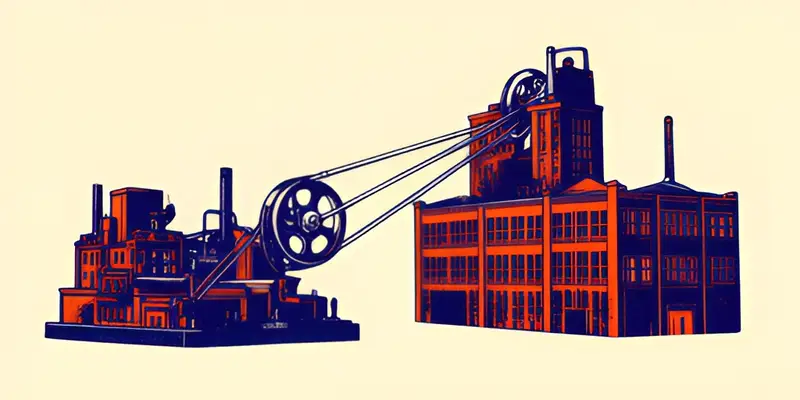 The Adaptive FactoryIf you knew everything you know now, what would you build? Incremental development can't get you there. A champion in production, a challenger rebuilt in shadow, and a harness that proves it is better can.
-
 From Moving Code to Moving Atoms: Where Physical AI RunsRobots and AI wearables will need about 100x today's off-device inference within five years. The harder question is where that inference runs, and who builds the router that decides.
Also recent





All writing18 pieces
Essays 7
Build logs 6
Notes 5
Claims I could be wrong about.
AI agents will write 100,000x more code within about ten years. All of it has to run somewhere, and Cloudflare is placed to run a meaningful share of it.
why
- In 1992, forecasts based on user growth said internet traffic would grow 300-400x. It grew about 100 million times, because machines made most of the traffic. Code forecasts based on the number of developers make the same mistake.
- GitHub Copilot wrote 27% of its users' code at launch in 2022, and 46% in 2025.
what would change my mind
Cloudflare failing to win a real share of where that code runs. AWS, Google Cloud and Azure will take most AI infrastructure spend either way.
what I'm doing about it
My pick is Cloudflare (NET), and I build on it too. Callozum, the Adaptive Factory and Lens all run on Cloudflare.
Robots and AI wearables will need about 100x today's off-device inference within about five years.
why
- Humanoid robot shipments are about tripling each year. About 18,000 shipped in 2025, and 19,000-25,000 shipped in the first half of 2026 alone.
- A robot that calls a model once a second uses about 100 million tokens a day. A heavy chat user uses tens of thousands.
what would change my mind
Robots that keep almost all inference on the device, or a fleet that grows much slower than 3x a year. Tesla's line for about a million robots a year is still a plan, and Musk's timelines slip.
what I'm doing about it
I built Lens, a coaching app for smart glasses, to learn where the time goes in a live loop.
read → From Moving Code to Moving Atoms: Where Physical AI Runs
Most new inference will watch a stream and ask one question all day: has anything changed?
why
- A camera at 30 frames a second makes 108,000 frames an hour. No one can pay for a large-model call on every one.
- Small decision models now answer standing questions fast. Cloudflare reports about 39 ms for Clef-flash, which returns a probability for each of up to 64 questions in one pass.
what would change my mind
Finding that a large share of frames need a large model, because then filtering saves little. My guess is that it's a tiny fraction, and I want to measure it.
what I'm doing about it
I'm building Callozum. It drops frames that didn't change, decides near the device, and calls a large model only when something did.
read → Inference That Knows Where to Run · From Moving Code to Moving Atoms: Where Physical AI Runs
Writing code got cheap, so a full rebuild can now run in shadow every cycle (it gets the real inputs, but its outputs aren't used) and take over only on evidence.
Most software doesn't need this. It pays off when hardware, models, data or requirements move faster than the code can follow.
why
- Agents wrote Bun's 535,000-line Rust port in eleven days. The release took four months, and 19 regressions got past more than a million test assertions. Writing was cheap. Proof was not.
- Tesla has run new driving software in shadow since 2016. FSD v12 replaced most of the 300,000 lines of C++ in v11 with one network trained on video.
what would change my mind
A ledger (the record of what the system must do and why) that can't hold enough to rebuild from. Brian Lee argues that the codebase is the most faithful spec, and he's right about most codebases today.
what I'm doing about it
I'm building the harness on Cloudflare. It runs a challenger (the rebuilt version) on real traffic, compares it with production, and records each verdict.
read → The Adaptive Factory
Most companies that say "AI-first" do commodity work, and calling it frontier work gets their funding, hiring and timelines wrong.
Commodity AI is the right choice for most companies. The test is simple: if you solved the problem perfectly, could a competitor copy it in a quarter? If so, it's commodity, and the value comes from your domain and how well you execute.
what would change my mind
A team that reaches the frontier without a hard unsolved problem, world-class researchers and a proprietary playground.
read → Two Types of AI: Why Most Companies Lie to Themselves · Frontier AI Needs Three Things. Most Companies Have One.
AI needs firm power. Small modular reactors can give it where wind and solar cannot.
These are factory-built reactors, placed on site, 50-300 MW at a time. I follow thorium molten salt reactors most closely, because of my background in materials engineering.
what would change my mind
Reactors that keep missing their dates. Aalo Atomics aimed to have a reactor running by mid-2026, and its Aalo-X test reactor went critical on 4 July 2026, but at zero power. Aalo plans to power a data centre on site in 2027. That's the date I'm watching.
read → A Bet on Nuclear
AI makes software personal, built for one user and their way of working. The same will happen to the machines we use. If you can dream it, you can build it, and the OS should bend the same way.
Much of this comes from DHH's belief behind Omarchy, that we can fix anything. On a desktop made of plain config files and scripts, an agent can read and change almost anything. What you can mend or bend, will bend.
what would change my mind
Locked-down platforms that keep winning on convenience, so that most people never want to change their machine, even when an agent could do it for them.
what I'm doing about it
I run Omarchy every day, I keep putting it on old laptops, and I send fixes to the open-source project. This site copies its shape.
Write to me about the problem you want to fix.
- emailEmail contact@meirdick.com
- linkedinLinkedIn in/mdick
- githubGitHub meirdick
- substackSubstack aistrategyconsultant
- rssRSS /rss.xml